Laurel, MD · Garage Door Service
Laurel Garage Door Pros serves Chevy Chase, MD, where most homes date to 1959, with spring, track, and opener repairs matched to that era's hardware.
Chevy Chase sits about 14 miles from our shop in Laurel, so a call here isn't a five-minute hop for us the way it is for jobs closer to home. We build that drive into the schedule rather than pretend it doesn't exist. We don't keep a depot or a truck staged in Chevy Chase, and we're not going to claim otherwise - every job starts with the trip down from Laurel, which means we ask a few more questions up front (door width, panel count, whether it's a torsion or extension setup) so the truck that shows up actually has what the job needs. If you need someone standing in your driveway in the next ten minutes, we're not that. If you can give us a window, we'll make the drive worth it.
We don't try to match original 1950s track brackets or springs off a shelf - that hardware isn't made anymore, and if your door still has its factory parts, sourcing an exact replacement can take longer than a same-week fix. We'll tell you that up front instead of stringing out a repair on something that should probably be replaced. We also won't quote a full job from photos alone when the door is an older conversion - too many of these houses have had openers, springs, or even full doors swapped out piecemeal over sixty-some years, and guessing at hardware from a phone picture just means a second trip. We'd rather see it in person once than twice. And we're not the outfit for architectural millwork replicas or anything outside standard garage door systems - we work doors, tracks, springs, and openers, not custom carpentry.
The median home in this part of Chevy Chase was built around 1959, which puts it well ahead of the 1974 median across our wider coverage area. That decade and a half matters more than it sounds like - it's the difference between a door built for a torsion spring bolted to a header that's since been re-insulated twice, and a door installed to a code written this century. With about 3,847 households in this pocket, it's a small slice of the 290,285 households across our whole service area, but it's also one of the higher-income areas we reach, with a median household income near $213,764 against a service-area median closer to $117,270. That combination - older houses, higher incomes - usually means more owners who've already put money into a door once and want the next fix done right rather than done cheap.
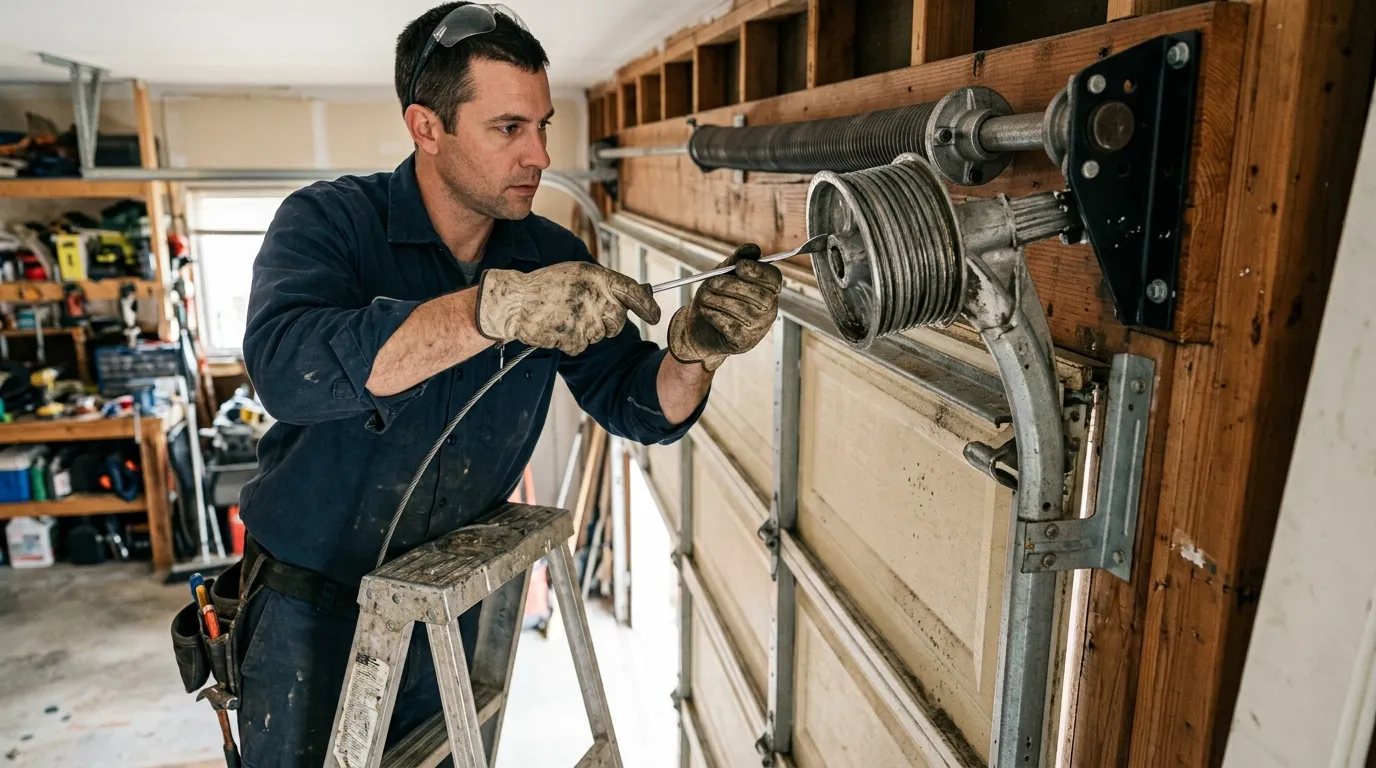
A door original to a 1959 build is almost never original by now, but the bones of the opening often are - narrower headroom than current code assumes, older-style track brackets, and in some cases extension springs mounted along the horizontal track instead of a torsion bar over the opening. That changes what a repair actually involves: swapping a torsion spring on a newer door is routine, but the same job on a 1959-era extension setup means working around a different cable path and different anchor points. On top of that, this whole area sits in a cold climate zone with real winter severity, and a lot of these older doors were never built with insulation in mind - the steel panel does its job but the header and jambs around it weren't sealed the way current builds are. If your door's original to the house and it's fighting you every cold morning, that's usually the header and weatherstripping, not the spring.
No. We're based in Laurel and drive out to Chevy Chase for jobs, about a 14-mile trip each way. We don't keep a truck staged locally, so we ask for a bit more detail on the phone up front to make sure we bring the right parts on that first trip.
Houses in this part of Chevy Chase mostly date to 1959, well before the 1974 median across our coverage area. Older openings often have narrower headroom and different spring hardware than current code assumes, so a repair here can involve different parts and a different approach than a job on a newer door.
Sometimes, but not always off the truck. Original hardware from that era isn't manufactured anymore, so an exact match can take longer to source than a standard repair. We'll tell you honestly if replacement makes more sense than chasing an obsolete part.
Possibly. This area sits in a cold climate zone with real winter severity, and doors original to 1959-era construction usually weren't built with insulation or sealing in mind. Often the cold-morning trouble is the header and weatherstripping around the door, not the door panel itself.
Call now or request a free quote - same-day service on most repairs, upfront written pricing.
