Laurel, MD · Garage Door Service
Laurel homes built between the 1960s and 70s wear out torsion springs fast once winter cold sets in. Same-week service for the fix, not a guess.
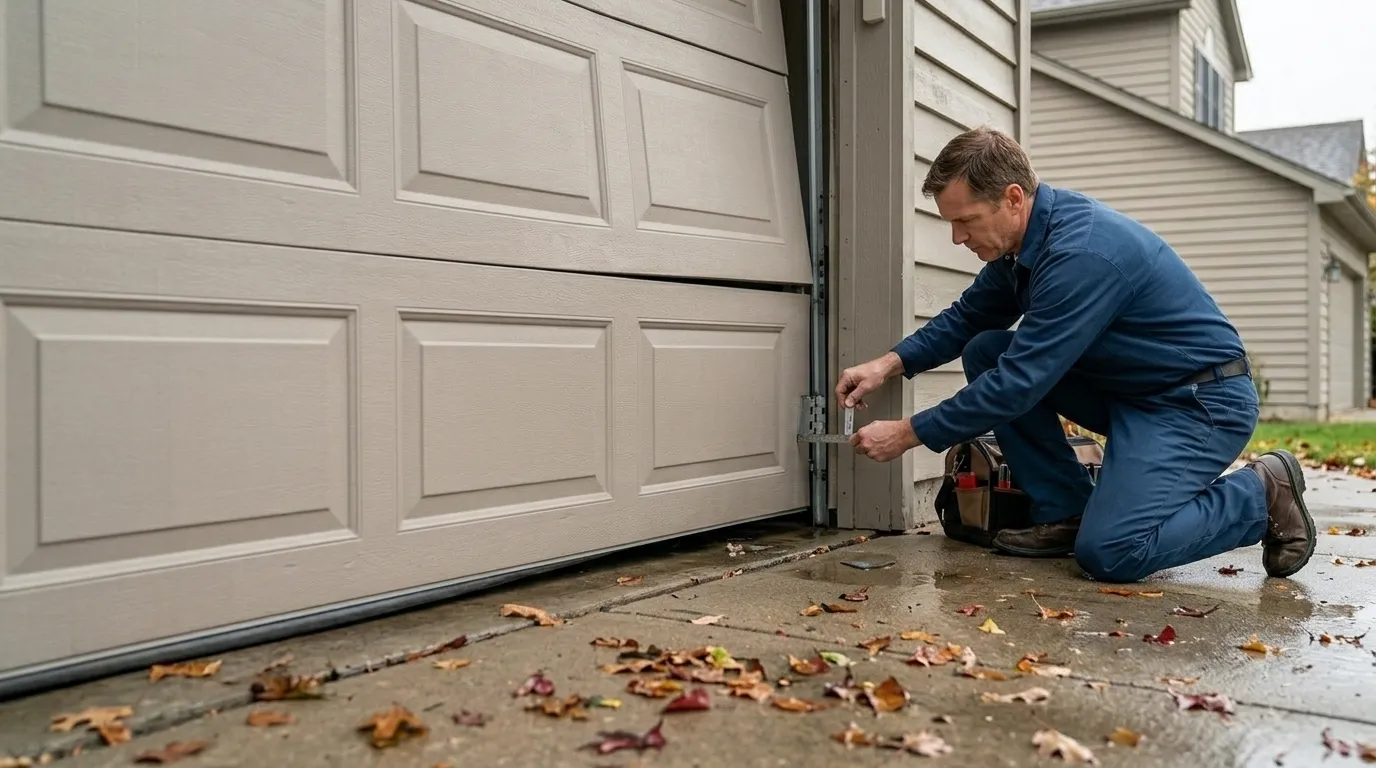
The door won't budge, or it lurches up six inches and stalls. Sometimes you hear a bang from the garage overnight and in the morning the door is loose, the cable slack on one side, the spring split in two. This is the most common call we get from Laurel, and it's not random. A big share of the houses here went up in the 1960s and 70s, with the broader stock running from 1948 into the 2010s and a median build year of 1974. That means a lot of torsion springs are original or one replacement removed from original, wound for a door and a hardware setup that's now fifty-plus years old. Steel fatigues on a cycle count, not a calendar, but cold makes the failure land in winter. When the temperature drops hard, the steel gets less forgiving and whatever hairline fatigue was already there finishes the job on a cold morning open. If your door has gotten noticeably heavier to lift by hand over the last year, that's usually the spring telling you it's close.
We check the spring size against the door weight first, because a lot of the springs we pull out of Laurel garages were undersized for the door even when new, or were swapped once already by someone matching the wrong wire gauge. We replace both springs on a two-spring system even if only one broke, since the other is on the same clock and a mismatched pair binds the shaft. We check the drums, the cables for fraying near the bottom bracket, and the bearing plates, since a worn bearing plate will chew through a new spring faster than it should last. On the older doors we see most often around here, the track brackets are original too, so we check those for elongated bolt holes before we call the job done. We don't recommend a spring-only patch on a door where the opener, track, and hardware are all from the same era and all near the end of their life together - at that point a repair is a stopgap, and we'll tell you that instead of just billing the spring.
Call or use the form on our site to get a time on the books. Tell us the door's approximate age if you know it, whether it's a single or double, and what it's doing right now - stuck, heavy, off-track, or making noise - so the truck that shows up has the right spring stock loaded. We work across the area, including the 73 named neighborhoods and towns near Laurel, and we schedule by drive time as much as by day, so a same-day slot depends on where the truck already is. One honest limit: if the fix needs a spring size we don't carry on the truck, we'll give you a firm return date rather than guess, because some wire gauges for older doors aren't something we keep in bulk.
Two things stack up in Laurel that you don't get everywhere. First, the age of the housing stock - a median build year of 1974 across a metro area of 290,285 households and 113,528 owner-occupied houses means a lot of original hardware is still in service, and torsion springs have a cycle life that original owners' grandkids are now finding the end of. Second, the climate band here is classified cold and severe, which means real winter swings, not just a few cold nights. Cold steel is more brittle steel, and a spring already fatigued from forty-plus years of cycling is more likely to let go on a hard-freeze morning than a mild one. We also see this concentrated in the older pockets of the service area rather than the newer construction, which tracks with the build-year spread across the region's 73 named communities - the newer the door, the newer the spring, the fewer of these calls.
Cold steel loses some flexibility, and a spring that's already fatigued from decades of cycling is more likely to fail under that added stress. Laurel's winters fall in a cold, severe climate band, so temperature swings are real here, not marginal - that's often the last push on a spring that was already near the end of its life.
Possibly. Housing in the Laurel area was built mostly between 1948 and the 2010s, with a median build year around 1974 and a lot of stock concentrated in the 1960s and 70s. If your house falls in that window and the spring's never been touched, yes, it could be original.
You can, but we usually don't recommend it on a two-spring door. The second spring is on the same age and cycle count as the one that failed, and running a new spring against an old one puts uneven tension on the shaft. Replacing the pair costs more upfront but avoids a second call soon after.
Yes, we schedule across the wider area, including neighborhoods and towns within roughly a ten-mile radius, and we route trucks by drive time so nearby jobs often get faster slots than the map distance alone would suggest.
Call now or request a free quote - same-day service on most repairs, upfront written pricing.
