Laurel, MD · Garage Door Service
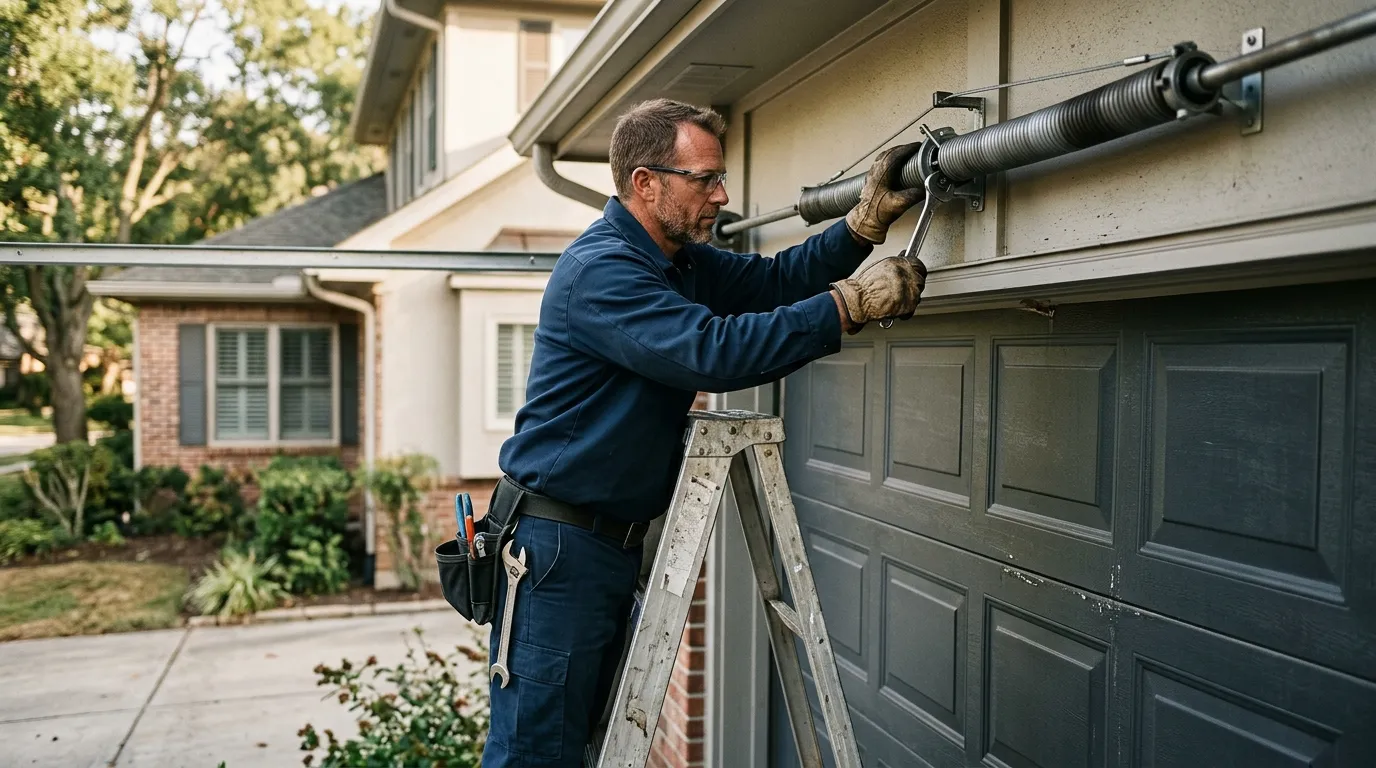
Garage door repair and install for Coral Hills, MD, where most houses date to the mid-1960s. We travel from Laurel to work on the torsion hardware that era used.
Coral Hills sits about 16 miles from our shop in Laurel, so we don't have a truck sitting around the corner waiting for a call. What that means in practice is that we build Coral Hills stops into a route rather than treating every call as a one-off drive down and back. If you call in the morning, we can usually tell you honestly whether we can fit you in that day or whether it's a next-day job. We're not going to pretend there's a depot five minutes away, because there isn't - we work this area out of Laurel, and the drive is part of the math on every job. That's not a knock on the work itself, just something worth knowing before you call: we're not the guys who can be there in twenty minutes for a spring that snapped at 7am, and we'd rather say that up front than promise something we can't deliver from 16 miles out.
We don't stock every panel or hardware size on the truck, and on a door old enough to need a part nobody makes anymore, that can mean a wait while we source it rather than a same-visit fix. We don't do custom architectural doors - carriage-style wood, oversized commercial rollups - that's a different trade with different suppliers. If a door has been rebuilt with mismatched springs or a jury-rigged opener bracket from a previous owner's fix, we'll tell you straight whether it's worth repairing or whether you're better off replacing the whole unit, rather than nickel-and-diming a door that's going to fail again in six months. And because we're driving in from Laurel, we're not the right call for an emergency lockout where every minute counts - if the car's trapped and you need someone in ten minutes, call someone closer. We'd rather turn down a job than show up and do it badly, or show up late and pretend that's fine.
The median house in Coral Hills went up around 1965 - a full decade earlier than the 1974 median across the wider Laurel service area we work in. That gap matters more than it sounds like it should. Houses built in that mid-1960s wave were framed and finished before a lot of the garage door hardware standards changed, and the doors that went in at the time - or got swapped in during the first replacement cycle in the 1980s - use bracket spacing, spring sizes and track widths that don't always match what ships on a door today. With 3,910 households in this pocket, it's a small, fairly consistent build era, not a mixed bag of decades like you'd see somewhere with more scattered development. Add in the cold-climate exposure this whole region deals with, and steel components that have been through fifty-some winters of expansion and contraction, and you've got a specific, predictable set of problems rather than a random one.
A door original to a 1965 build, or even a first-generation replacement from the 1980s, is very likely on side-mounted torsion or extension spring hardware that predates the standardized bracket spacing most parts suppliers carry now. That's the honest reason a repair here sometimes takes an extra call to track down the right spring or roller size instead of a next-day fix. The cold-severe climate this area sits in doesn't help - steel torsion springs lose tension faster through repeated freeze-thaw cycling, and nylon rollers from that era go brittle well before their modern counterparts would. At a median household income of $83,899 here, well under the $117,270 median for the broader service area, we try to be upfront about repair-versus-replace math rather than defaulting to the most expensive fix. Often the right call on a door this age is replacing the spring set and rollers as a unit rather than patching one part and leaving the rest to fail next winter.
No. We work out of Laurel, about 16 miles away, and travel to Coral Hills as part of our regular route. We're upfront that this isn't a same-day emergency service area the way it might be closer to our shop.
Doors and hardware from that build era often use bracket spacing and spring sizes that predate current standard sizing. Finding the exact match sometimes takes an extra call to source, rather than being something we carry on the truck for every job.
Depends on the door. If the panels and track are sound and it's just spring or roller fatigue from age and cold-weather cycling, repair usually makes sense. If the hardware's been jury-rigged over the years, replacement is often the better long-term call.
This area sits in a cold-severe climate band, and repeated freeze-thaw cycles wear out steel springs and brittle old rollers faster than milder climates would. It's a real factor in why older doors here fail more often in winter.
Call now or request a free quote - same-day service on most repairs, upfront written pricing.
