Laurel, MD · Garage Door Service
South Kensington homes date to about 1956, older than most of Laurel's service area. We work on the original torsion hardware these houses still carry.
South Kensington sits about 12 miles from our shop in Laurel. We don't keep a truck stationed out here, so every job on this side of the coverage area gets scheduled as a run from the shop rather than a drop-in visit. That's worth knowing up front if you're used to same-day service from a company based closer to you. It doesn't change the work once we're at your door, but it does mean we plan the trip and load the truck for what your specific door needs before we leave, based on what you tell us on the phone. If you can give us the age of the house and whether the door is single or double, we'll bring the right springs the first trip instead of a second one.
We cover a wide stretch of territory out of Laurel, and South Kensington is toward the far edge of it. That's fine for scheduled repairs and installs. It's just not a same-day emergency call the way a job five minutes from the shop would be.
We fix and replace garage doors: springs, openers, tracks, cables, rollers, and panels. We don't do structural carpentry - if your door opening has rotted framing or the header needs rebuilding, that's a carpenter's job before it's ours. We also won't sell you a full door replacement when a spring or a bent track is the actual problem; if the fix is small, we tell you it's small.
Because we're traveling 12 miles each way, we're upfront that we can't promise the same turnaround as a shop sitting in town. For a routine repair that's rarely an issue. For a door that's stuck shut with a car trapped behind it, call us and we'll tell you honestly whether we can get there fast enough to be worth it, or whether a closer outfit makes more sense for that specific hour.
The typical house in South Kensington went up around 1956. That's meaningfully older than the median build year of 1974 across Laurel's broader service area, and it matters more than it sounds like it should. A house built in 1956 was built to a different garage door opening, different framing tolerances, and different hardware standards than one built in the 1970s.
With roughly 2,836 households in the area and a median income of $193,793 - well above the $117,270 median for the wider service area - a lot of these homes have been renovated inside without anyone touching the garage. The door and its hardware often got left as the last original system in the house, quietly aging past the point where replacement parts are still on a supplier's shelf.
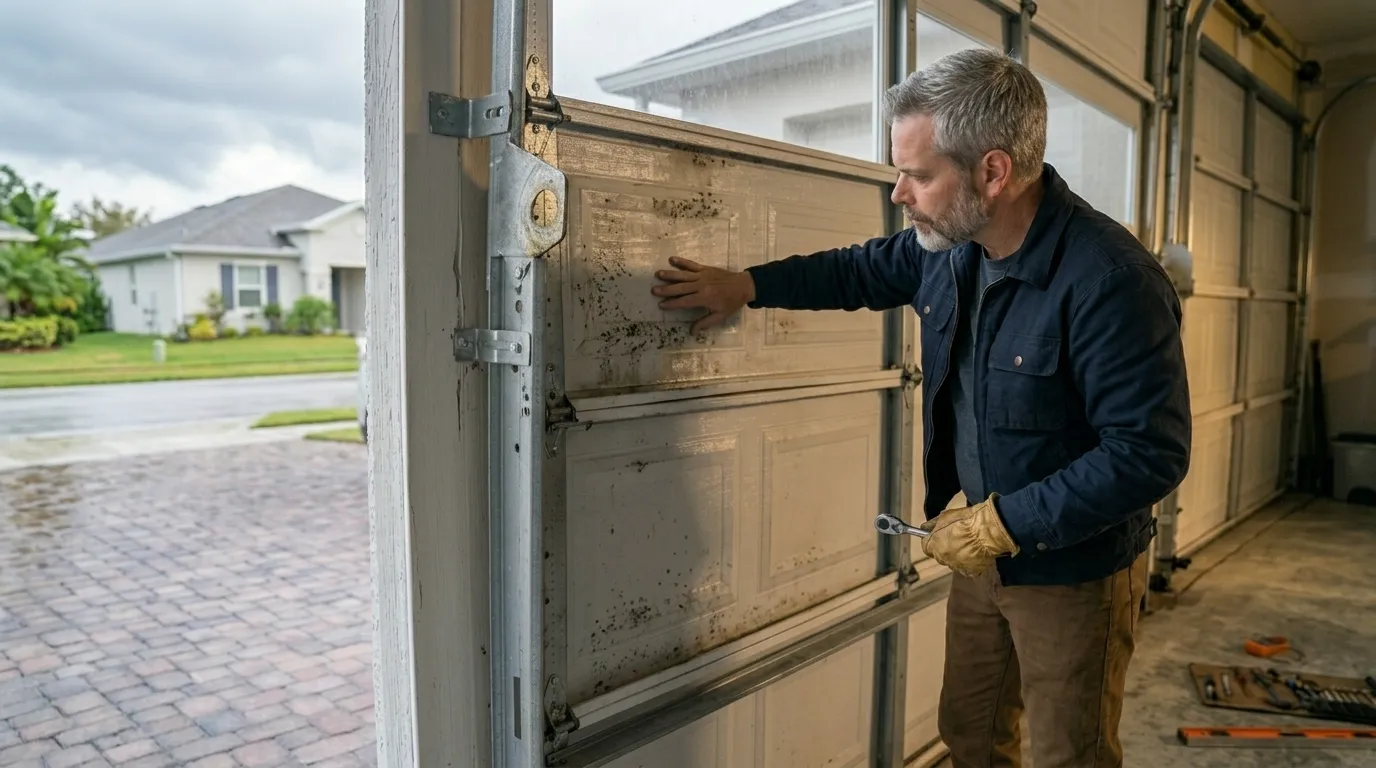
A 1956-built garage in this area was almost never designed for a double-wide opening. Most were single-car, single-panel doors on a single torsion spring sized for a lighter, thinner panel than what gets installed today. When one of those springs finally goes, the fix isn't always a straight swap - the spring size, the drum, and sometimes the track spacing don't match anything a supplier stocks new.
The cold winters here (F3's severe cold band applies across the whole service area, this house included) put extra strain on that original hardware. Steel contracts in the cold, lubricant thickens, and a spring that was already worn from decades of cycling is more likely to snap on a January morning than a July afternoon. If your door still has its original 1950s-era track and drum, we'll tell you straight whether it's worth rebuilding around old parts or whether a new torsion system will actually cost you less over the next ten years.
No. We run out of Laurel and travel to South Kensington, about 12 miles away, for scheduled repairs and installs. We don't keep a depot or a truck stationed in the area, so plan for a scheduled visit rather than a same-day drop-in.
Houses here typically date to around 1956, which is older than the 1974 median build year across the wider service area. Older homes often carry original torsion hardware sized for lighter, older-style panels, which can mean a repair needs different parts than a newer house nearby would.
Sometimes. If the spring size still matches a common stock size, yes. On a house built in the mid-1950s, the original spring and drum combination isn't always something a supplier carries anymore, so the job can take an extra step to source the right part.
Call now or request a free quote - same-day service on most repairs, upfront written pricing.
