Laurel, MD · Garage Door Service
Fairland homes mostly went up in the 1980s, which means galvanized torsion springs and steel doors now pushing 40 years. Maintenance from our Laurel crew, 5 miles out.
Most of Fairland was built when steel sectional doors with galvanized torsion springs were the standard install, not the wood or one-piece doors you'd find in older parts of the county. That's good news for a DIY owner: parts for a mid-1980s torsion setup are still common, and lubricating hinges, rollers, and the torsion shaft with a garage-door-specific lubricant (not WD-40, which washes out grease) is a ten-minute job you can do twice a year. Checking the auto-reverse safety feature by setting a 2x4 flat on the ground under the door and watching it reverse on contact is also safe for anyone to do.
What's not a DIY job is anything involving the torsion spring itself. A door built in the 1980s has had roughly 10,000 open-close cycles by now if it's original, and torsion springs are usually rated for that range. If yours hasn't been replaced, it's due, and the spring is under enough stored tension to break a bone if you get it wrong. That's the line where a maintenance visit turns into a repair call, and it's worth knowing before you start.
We don't have a fixed maintenance price to quote here without a look at the door, since a two-car double panel takes more time and hardware than a single. What we can tell you is that Fairland's housing stock, mostly mid-1980s builds, tends to need the same handful of items: torsion spring lubrication or replacement, roller swaps, and track alignment. Owners who catch worn rollers or a stiffening spring before it fails usually spend less than the ones who wait for a snapped cable on a Saturday morning.
A standard maintenance visit on a single-car door runs shorter than most owners expect, and a double door with two openers takes longer than a single. Doors from this build era typically have had one prior spring replacement if any, so the tech's time goes mostly into inspection, lubrication, and hardware tightening rather than a full teardown. If a part is worn past adjustment, like a track that's bent from age, that becomes a separate repair conversation rather than something finished in the same visit.
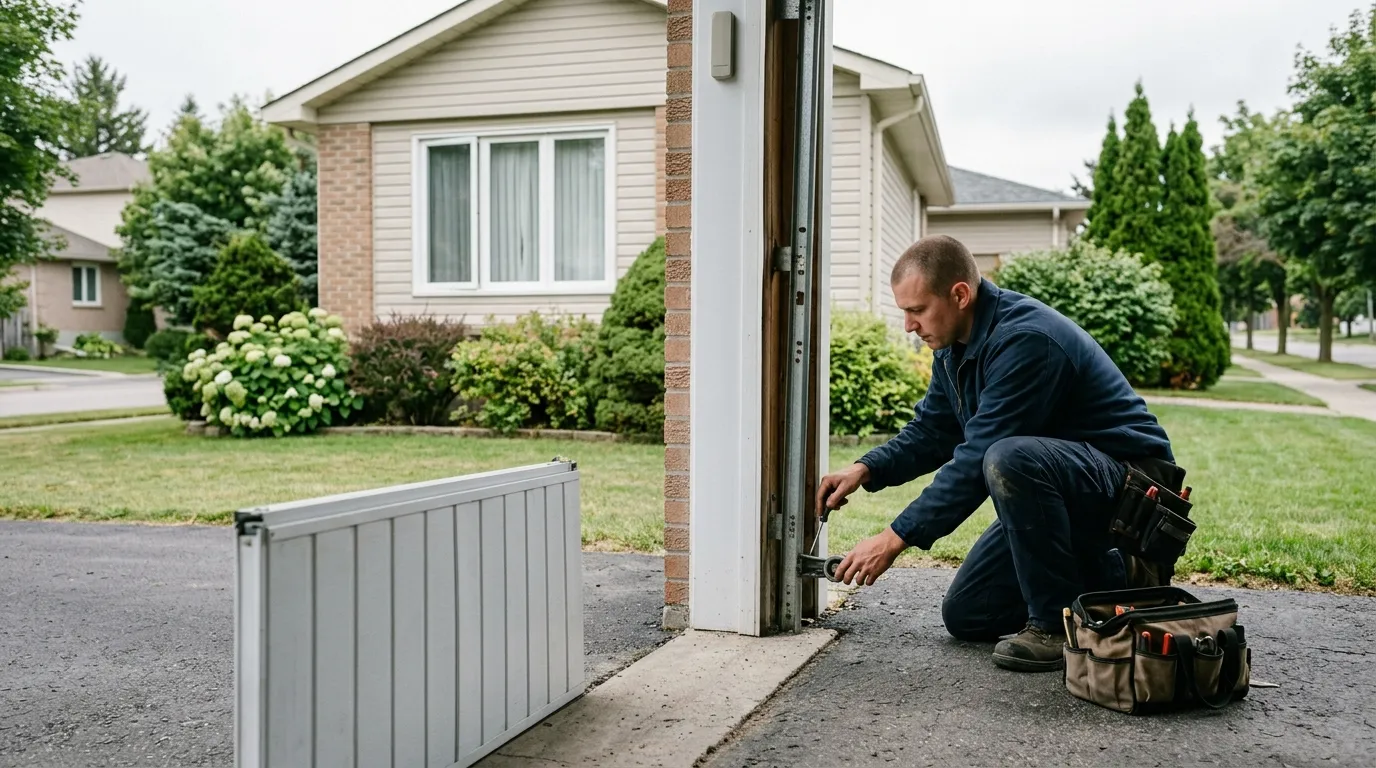
On a house built in the mid-1980s, the maintenance checklist centers on the parts that were standard for that era of construction: galvanized torsion springs, steel roller tracks, and the original opener rail if it hasn't been swapped. The tech checks spring tension and wear, inspects the torsion bar and cable drums for rust (relevant given the cold, damp winters this area gets), tightens the track brackets against the frame, lubricates every moving joint, and tests the opener's force settings and auto-reverse safety switch. On a door this age, cracked or missing weatherstripping at the bottom panel is common and gets flagged even though replacing it isn't always done in the same visit.
Fairland sits in a cold, severe winter climate band, and the freeze-thaw cycle is hard on steel hardware that's been in place since the 1980s. Torsion springs lose tension gradually with cold-weather cycling, and galvanized coatings that were standard on doors from that build era start showing surface rust after enough winters, especially on tracks and cable drums that trap moisture. Because most of the housing here went up within a fairly tight window, a lot of doors in the area are hitting the same wear point around the same time, which is different from a neighborhood with a wider mix of build years where failures are more scattered.
We run maintenance visits into Fairland from our Laurel base, about 5 miles out. We don't keep a branch or truck stationed in Fairland itself, so a visit gets scheduled the same way any Laurel-area call does. If your door hasn't had a maintenance check since it was installed, and a lot of the doors here haven't, it's worth getting ahead of a spring that's due rather than waiting for it to let go.
If the door or its torsion spring dates back to the original build, it's likely nearing or past the cycle count the spring was rated for. On a mid-1980s door, that's a real possibility, and it's the kind of thing a maintenance visit checks rather than something you can eyeball from the driveway.
Cold makes steel springs contract slightly and grease thicken, so a door that opens smoothly in summer can feel heavier or slower in freezing weather. In a cold, severe climate band like this one, that seasonal swing is normal, but it's also when a marginal spring is most likely to finally give out.
No. We work out of Laurel, about 5 miles from Fairland, and travel out for maintenance and repair calls. There's no separate branch here, so scheduling works the same as it would for any address in the surrounding service area.
Light surface rust on galvanized tracks, common on doors from the 1980s after enough winters, can usually be cleaned and treated during a maintenance visit. If the rust has pitted the steel or the track is bent, that's a repair or replacement conversation instead.
Call now or request a free quote - same-day service on most repairs, upfront written pricing.
