Laurel, MD · Garage Door Service
Fairland's houses mostly date to the mid-1980s, which means steel sectional panels, not the older stock closer to Laurel. See what panel replacement costs and involves here.
A single dented or cracked panel on a sectional door can look like a job you can knock out in an afternoon, and sometimes it is - if you can find a panel that matches. The trouble in Fairland is less about skill and more about sourcing. Houses here went up mostly around 1985, which puts a lot of doors into steel sectional designs with foam-core insulation, and manufacturers change panel profiles often enough that a 35-40 year old section doesn't always have a drop-in replacement anymore. Measuring the panel, matching the color, and getting the fasteners lined up on foam-core sections without crushing the insulation is where a lot of DIY attempts stall. If the door is a common width and you can get an exact match panel, doing it yourself is realistic. If you're guessing on the match, or the track and hinges have to come apart to get the old panel out, that's where it stops being a weekend job and starts eating a weekend.
We don't publish a flat number here because panel cost swings hard on door age and style, and in a town where the housing stock centers on 1985 builds, that usually means steel sectional doors rather than the older wood or single-layer builds you'll see nearer Laurel's older neighborhoods. Foam-core steel panels cost more to source and match than plain aluminum. Fairland's median household income, $87,924, runs below the wider service area's $117,270, and in practice that means more households here ask about single-panel repair instead of full-door replacement - fixing the damaged section rather than swapping the whole door. That's usually the right call anyway when only one or two panels are hit and the rest of the door, opener, and hardware are sound.
Straightforward jobs - one panel, standard width, no track or spring work needed - run short. Where it stretches out is matching a panel on an older foam-core door; if the exact profile isn't something we can grab locally, that becomes a lead-time issue, not a labor issue. We'll tell you upfront if a panel has to be special-ordered rather than promise a same-day fix we can't back up. Once the part's on hand, swapping a panel on a sectional door without touching springs or the opener is quick work.
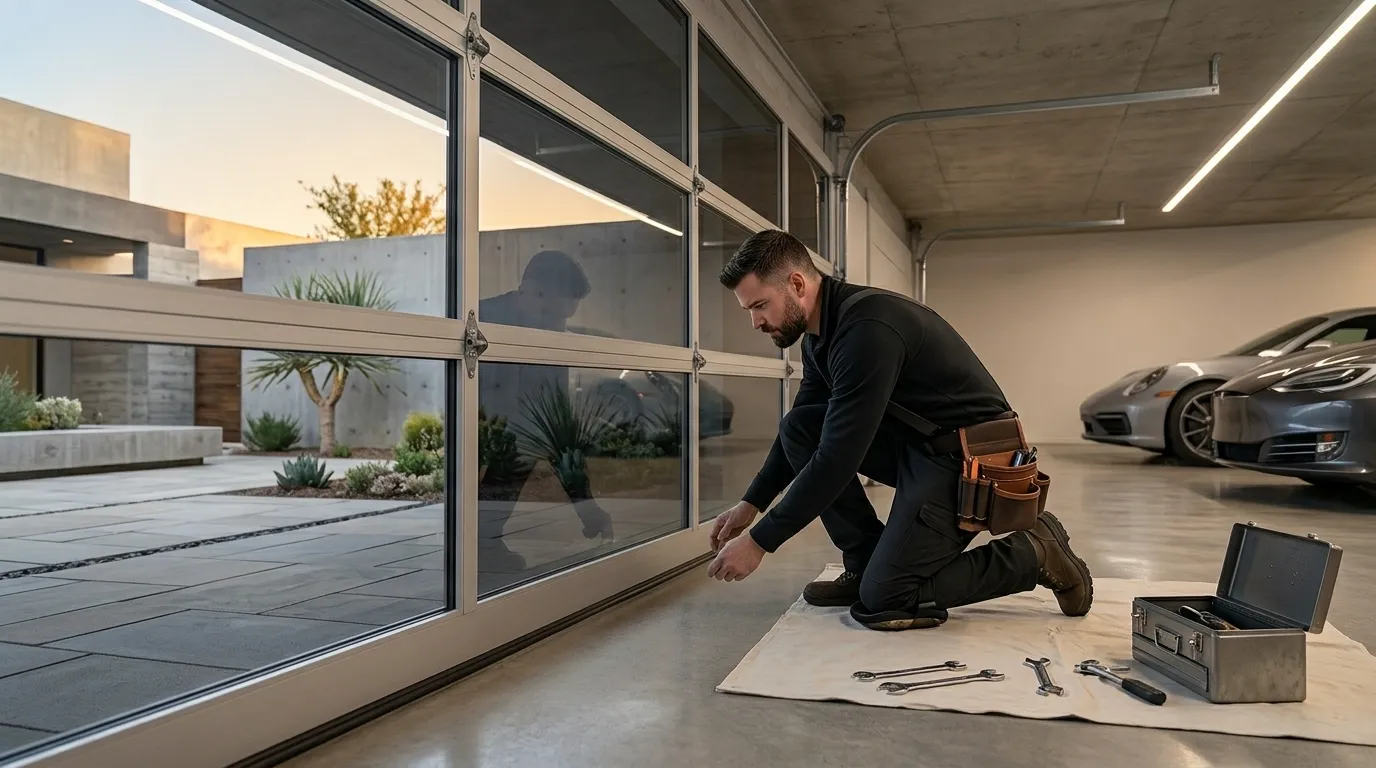
On a sectional door, we disconnect the opener, run the door to expose the damaged section, pull the hinges connecting it to the panels above and below, and lift the section out of the track. The new panel goes in reversed - hinges reset, rollers reseated in the track, and everything tested through a full open-close cycle before we touch the opener again. On foam-core panels common to Fairland's 1980s-era doors, we're careful with the hinge screws; over-driving them crushes the foam core and creates a soft spot that shows up as a rattle within a year. If the panel border a section with a bent or bowed track, we check and true the track before reinstalling, since a panel mounted against a bent track will bind and dent again.
With Fairland's doors mostly dating to the mid-1980s, we're at the point where foam-core insulation starts to break down - delamination from decades of temperature swings in our region's severe cold band. A delaminated panel loses rigidity, sags slightly, and becomes far more likely to crack or bow under the stress of a car bumper tap or a stuck opener trying to force a door that's binding. The other common cause is straightforward impact: a car edge, a bike, a basketball. On a foam-core door, an impact that would just dent an older solid-steel panel can crack the outer skin clean through, because the foam behind it doesn't flex the same way.
We run out of Laurel, and Fairland sits about 5 miles out, close enough that it doesn't add meaningful travel time to a scheduled visit. If you know the damage is limited to a panel or two and want a look before committing to a full quote, tell us the door's approximate age and whether it's steel or aluminum - for a house built around 1985 here, that's usually enough for us to start narrowing down panel options before we're even on site. You can also check our coverage for the wider area or see how panel work runs closer to Laurel itself.
Often, yes, if it's a common steel sectional profile - a lot of Fairland's stock dates to the mid-1980s and falls into a handful of standard widths and styles. If the door is an unusual size or an older discontinued line, we may need to special-order the panel, and we'll tell you that cost and lead time before starting.
If only one or two panels are damaged and the rest of the door, track, and opener are in good shape, single-panel replacement is almost always cheaper than a full door swap. Full replacement makes more sense when several panels are cracked, delaminated, or the door is failing in more than one place at once.
Yes. We work out of Laurel and Fairland is about 5 miles out, which doesn't add meaningful time to scheduling. We just need the door's approximate age and style so we can look into panel availability before the visit.
On foam-core panels, once the insulation delaminates - common in doors from the mid-1980s after decades of cold-weather cycling - the outer skin loses support and becomes more prone to cracking under repeated minor impacts, even light ones a solid panel would shrug off.
Call now or request a free quote - same-day service on most repairs, upfront written pricing.
